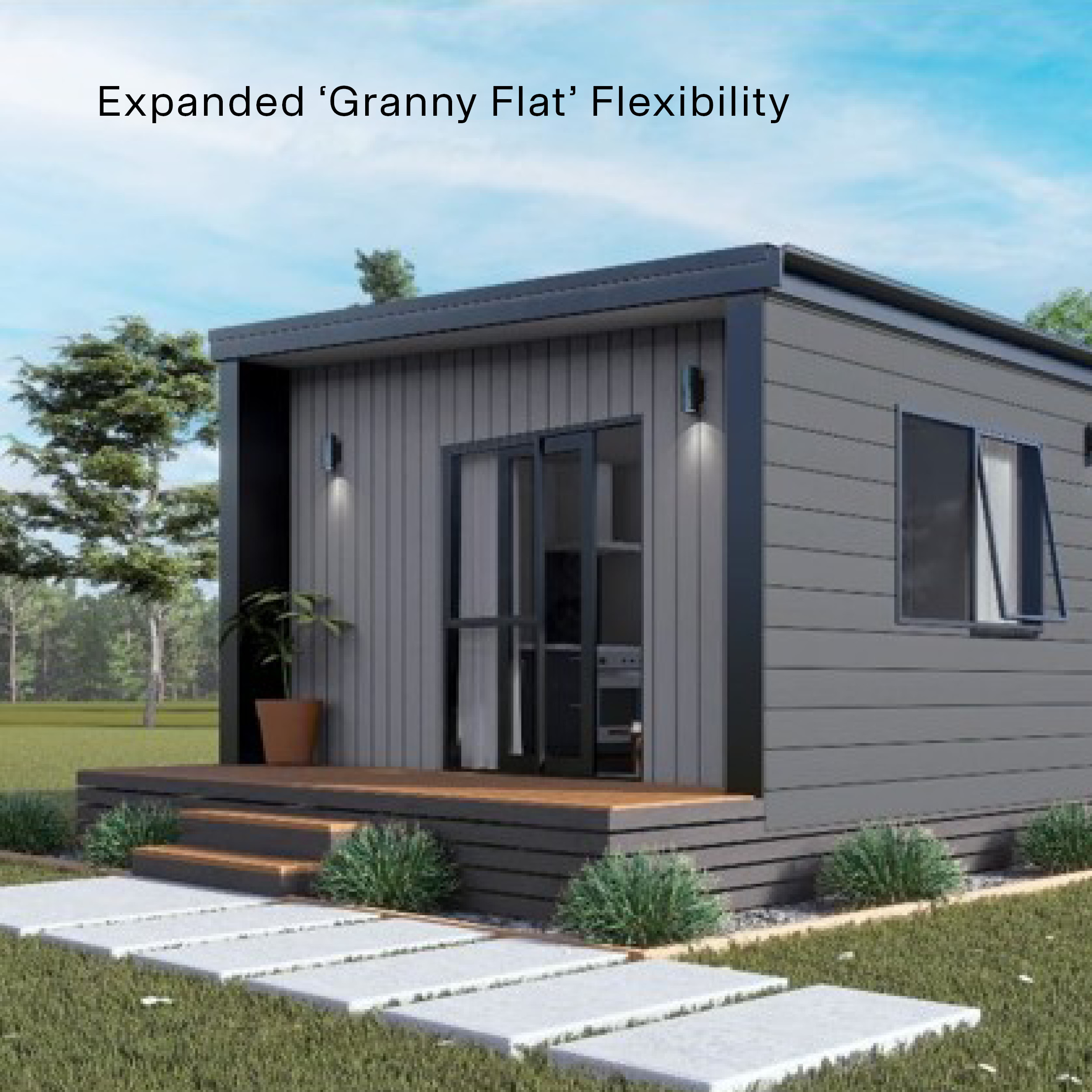
Update: Expanded 'Granny Flat' Flexibility
This article follows our earlier piece: Minor Dwellings in NZ: What You Can Build and When You Need a Consent which we published following changes to legislation making minor dwellings ('granny flats') a permitted activity without requiring a building consent.
An additional update was released on 28 April 2026 building on the earlier changes, further expanding the flexibility of granny flat provisions and supporting faster delivery of small-scale housing across New Zealand.
The Government has signalled a continued focus on reducing regulatory barriers, with the latest changes aimed at increasing homeowner choice and enabling a wider range of construction methods, particularly off-site prefabrication.
Key Changes:
Off-site construction allowed earlier
Consent-exempt granny flats can now be constructed off-site before a Project Information Memorandum (PIM) is issued, provided all exemption conditions are met.
- This enables dwellings to be built in advance
- Buyers can inspect completed units prior to purchase
- Overall construction timeframes are reduced
However, a PIM is still required before any on-site works begin, ensuring the dwelling is suitable for the specific site (e.g. services, hazards, and constraints).
Expanded building material eligibility
The exemption will be broadened to include Structural Insulated Panels (SIPs) where they have a CodeMark certificate.
- Recognises a broader range of modern prefabricated systems
- Maintains compliance with Building Code requirements
Minor technical refinements
The Government has indicated further small amendments will be made to improve clarity and ensure the provisions are workable in practice.
Ongoing Framework (unchanged):
These updates sit alongside the existing framework introduced in January 2026:
- Detached minor residential units (DMRUs) up to 70m² can generally be constructed without building or resource consent, provided national standards are met.
- The provisions are enabled under both:
- The Building Act 2004 (building consent exemption)
- The National Environmental Standards for Detached Minor Residential Units (NES DMRU) under the Resource Management Act 1991
Implementation Timing:
The April updates are expected to be formalised via Order in Council in Q3 2026, meaning further refinements to current practice are still pending.
What this means in practice:
For homeowners, developers, and planners, the direction of travel is clear:
- Increased viability of prefabricated and modular housing
- Reduced programme risk through earlier build commencement
- Greater flexibility in delivery pathways (off-site vs on-site vs consented builds)
From a planning perspective, while consenting requirements remain streamlined, site-specific constraints (via PIM and District Plan standards) still play a key role in determining whether a proposal qualifies for the exemption.
If you're planning a minor dwelling and want clarity on whether you need resource consent, what it will cost, or how long it might take, our team can help.
Inovo’s resource consent planners and planning consultants can quickly review your site and provide clear, practical advice on the best path forward.
Get in touch to discuss your project.
rmplanning@inovo.nz
020 4000 0294
Was this article helpful? Here’s some other topics that might be interesting to you:
How does Plan Change 120 affect your development options?
Disclaimer
This article contains general information and opinion based on our expertise. It is provided free of charge and does not constitute legal or other professional advice. The information within it was up to date at the time of publishing.
Have you got further questions about this topic or our other services?
We are always happy to help – drop us an email rmplanning@inovo.nz, or phone us on 020 4000 0294.
.png)